

For years, I thought I wasn’t cut out for networking. Turns out, I just needed quieter rooms and better questions.
Networking is not about being the loudest person in the room.
For introverts (myself included), that’s good news.
You don’t need to “work the crowd” or collect a stack of business cards.
You just need a plan that plays to your strengths—quiet focus, thoughtful preparation, and genuine curiosity.
7 strategies I’ve learned to network effectively over the years, even though big social events drain me:
1️⃣ Go in with a plan
Walking into a conference without a plan is like showing up to clinic without your schedule—you’ll be reactive instead of intentional.
Before I travel to a meeting, I spend time combing through the speaker list, attendee roster (if available), and program schedule. I’ll identify two or three people whose work genuinely connects with my research goals or curiosity. Then I do a bit of homework: skimming their recent papers, watching any recorded talks, and thinking of one or two specific points I’d like to discuss.
Sometimes I’ll reach out before the conference:
“I’ll be at [Conference Name] and noticed you’re speaking on [topic]. I’d love to connect for a quick coffee or walking chat if your schedule allows.”
This turns a potential cold introduction into a warm, expected meeting, which for me takes away much of the anxiety of approaching someone new.
2️⃣ Focus on depth, not breadth
Skip the “collect as many introductions as possible” approach.
In my early years, I thought conferences were about attending every lecture and meeting every possible contact. I would rush from one hall to the next, notebook in hand, scribbling notes—but making zero real connections.
That changed when I started prioritizing depth. Poster sessions became my go-to. They’re quieter, slower paced, and give you a natural conversation starter: the poster itself.
Some of my most important professional relationships began at posters. Even the biggest names in the field have to stand there for their allocated time. I’ll ask about the motivation for their study, dig into a methodological choice, or connect it to something I’m working on. Many times, that initial chat has turned into follow-up meetings, collaborations, or mentorship.
3️⃣ Have your elevator pitch ready
As an introvert, large Q&A sessions can be overwhelming. I often prefer to connect with speakers after their talk.
If I see they’re heading to another session, I’ll match their walking pace and start a short conversation—something like, “I enjoyed your presentation on [topic]. I was curious about how you approached [specific detail].” Walking side-by-side feels less intimidating than facing someone in a crowded hallway. I’m always careful not to overstay—if they seem rushed, I thank them and let them go.
Having my own short, practiced introduction ready makes these moments smoother. I can adapt it depending on who I’m talking to, but it usually follows this structure:
Name → Role → Research focus → One intriguing hook
“I’m a Physician-Scientist and Assistant Professor in Rheumatology at Vanderbilt University Medical Center. I lead our psoriatic arthritis and spondyloarthritis clinical and research program. My work combines epidemiology, bioinformatics, genetics, and AI to advance personalized medicine in real-world patients. Recently, we’ve been exploring…”
From there, I pivot to their work with a genuine question. That shift takes the spotlight off me, which I find more comfortable, while still building rapport.
4️⃣ Leverage shared spaces
Some of the best conversations I’ve had have been outside formal networking events:
- Over coffee breaks when everyone’s relaxed and looking for a seat
- In line for lunch when small talk can naturally turn into research talk
- Walking between sessions with a speaker I admire
- Standing in front of a poster where the person has to be for the next hour
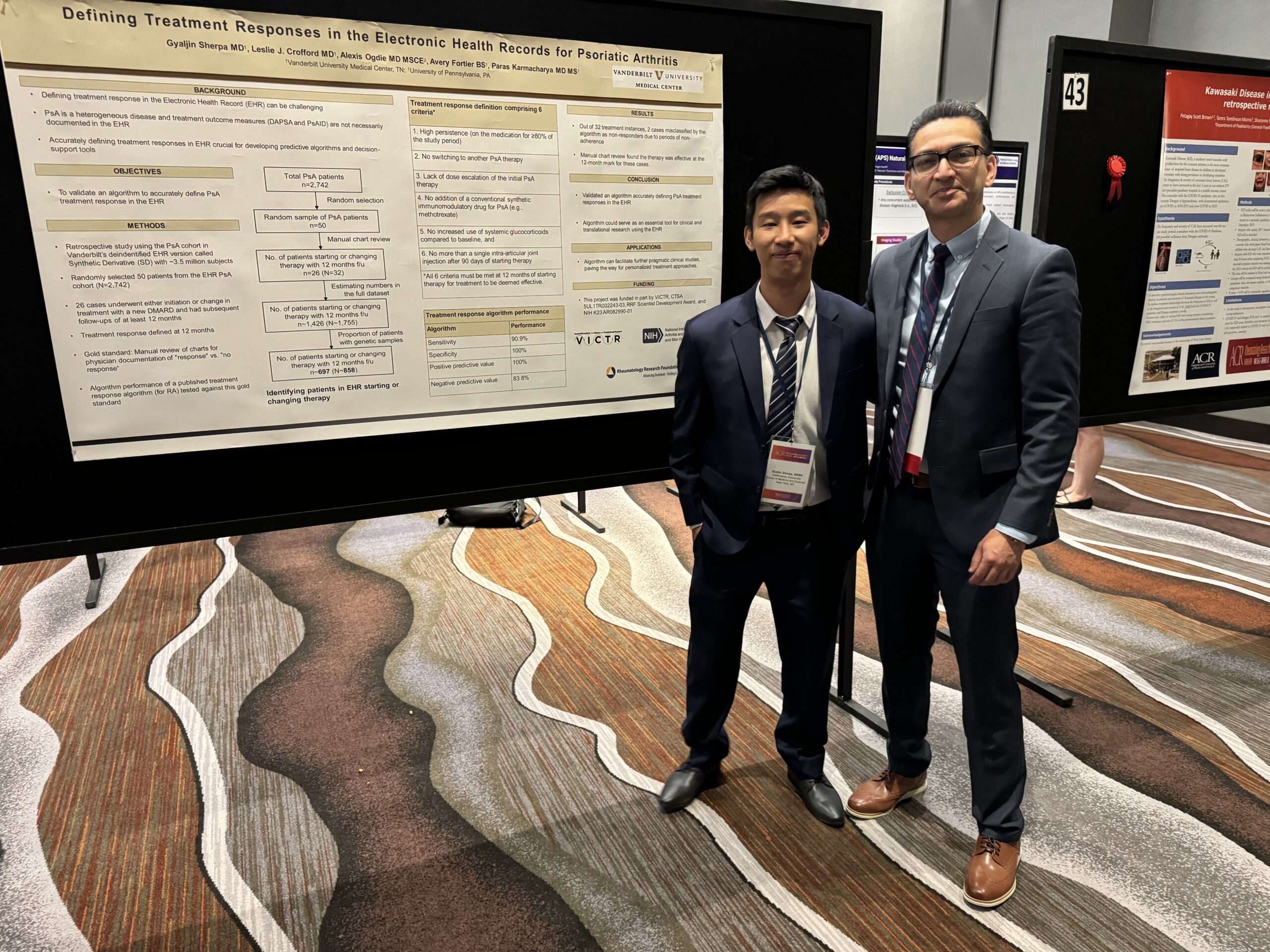
(My mentee presenting at a conference. He was delighted to have a chance to meet some of the most prominent researchers at the poster. And after he was done, we toured the poster hall and I introduced him to the experts in the field.)
These in-between moments feel less forced. For me, they often lead to more candid, memorable conversations than big receptions where I feel swallowed by noise and crowds.
5️⃣ Use structured roles to your advantage
Early on, I joined conference organizing committees as a trainee. My role was small, helping coordinate abstracts, managing logistics. But it gave me an excuse to talk to senior faculty, invited speakers, and other organizers. Over time, those “task-based” interactions built trust.
Now, as a faculty member, I’m still part of organizing committees. The relationships I built over the years have not only lasted but deepened. Some of these colleagues have become peer mentors, collaborators, and friends I genuinely look forward to seeing each year.
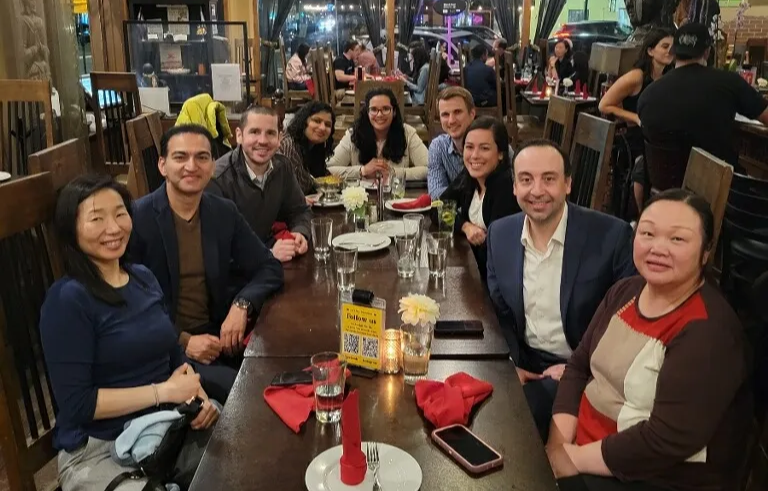
(Get together with our professional meeting organizing committee. No drinks involved 😛 )
Structured roles such as, chairing a session, moderating, or even just helping set up a room, give you visibility without having to constantly self-promote.
6️⃣ Follow up while it’s fresh
If I’ve had a good conversation at a conference, I make a quick note in my phone right after:
- Name
- Affiliation
- What we discussed
- Any promised follow-up
Within a few days, I send a short, personalized email. Something like:
Hi [Name],
I enjoyed our conversation at [specific session/poster/reception] during [Conference Name], especially your insights on [topic].
I’ve since looked into [related paper/resource] and thought it might connect well to your work. Perhaps we could explore [idea/project overlap].
Best,
[Your Name]
It’s simple, but it transforms a fleeting chat into a relationship that can grow over time.
7️⃣ Don’t discount online networking
Not all of my closest professional contacts came from conferences.
I’m fairly active on LinkedIn, and over the years I’ve connected with fellow academics and research creators I’ve never met in person.
Many of these relationships started with small interactions – commenting on each other’s posts, encouraging each other, and exchanging resources. Eventually they moved to one-on-one Zoom calls.
Some of these people have become true friends, collaborators, and sources of professional support.
For an introvert, online platforms can be the perfect way to build trust and connection before ever shaking hands in person.
For my fellow introverts
Networking in academia doesn’t require performing or pretending to be an extrovert.
It’s about:
- Connecting with intention
- Using quieter, shared spaces
- Asking genuine questions
- Following through—both offline and online
When you plan ahead, focus on depth, and nurture the relationships you start, you’ll walk away with fewer, but far stronger connections.
What’s one networking strategy that’s worked for you at conferences?
P.S. I’ve taken that same intentional, researcher-first mindset into how I build tools too.
I’ve spent the last 1.5 years building Research Boost because I was fed up with tools that don’t understand how researchers actually work. This one does. Built for clinical minds, not prompt-hackers. It is finally launching next week (after tons of testing).
Stay tuned – you can sign up for the waitlist list HERE: https://researchboost.com/